
Explainer Features of Capitalism
Free Market Economy
In a free market economy, producers and consumers trade goods and services with limited interference from the government to set prices or dictate production.
A key principle of the free market is the idea of voluntary exchange, in which producers and consumers freely decide the terms of their trade. Producers decide what goods to make or what service to provide, and they set an asking price. Consumers decide what to purchase and whether a price is worth paying. The final sale price emerges from the interactions between producers and consumers.
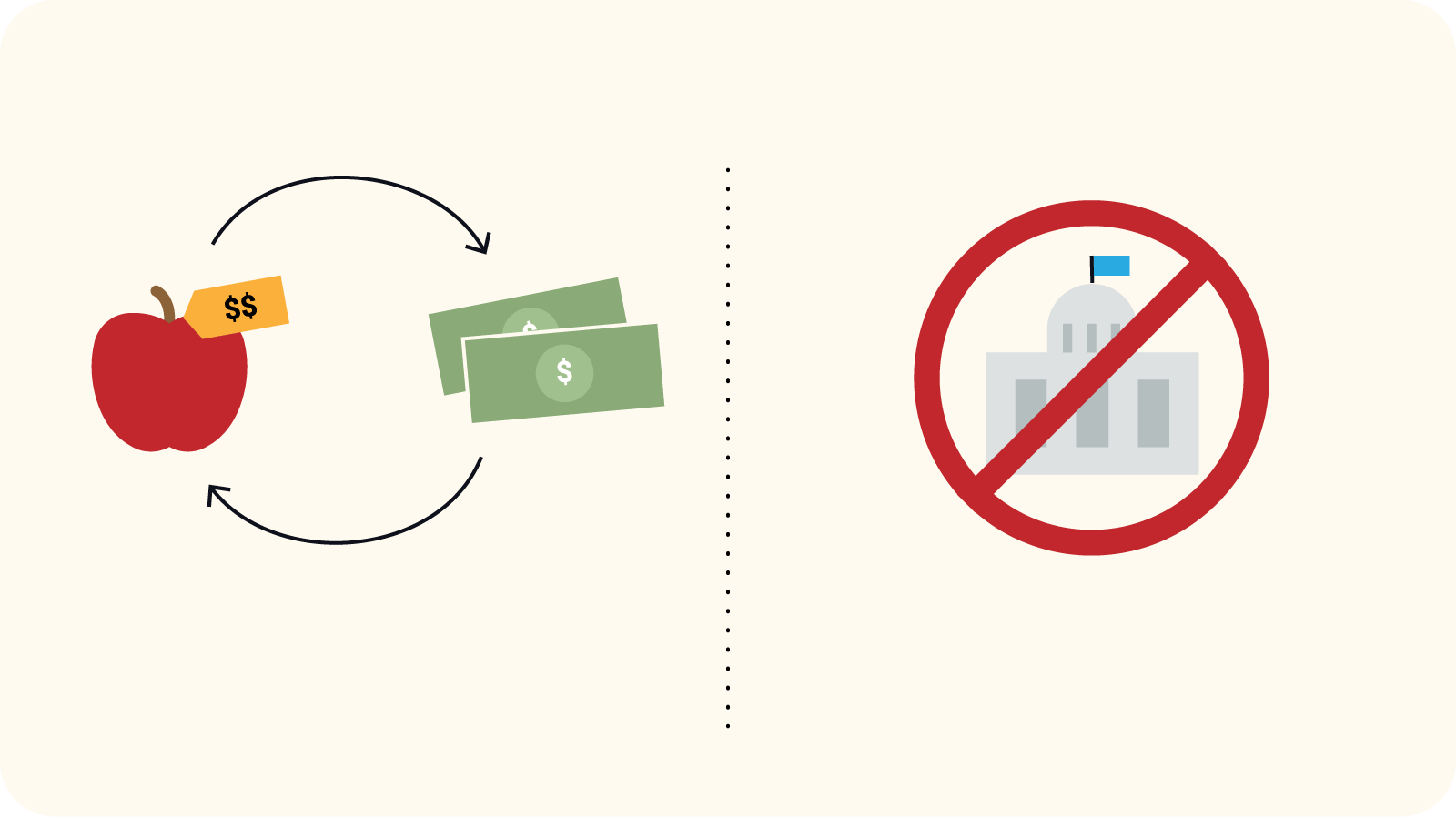
In a free market economy, participants are…
…free to engage in voluntary exchange of goods and services.
…free (to a large extent) from government interference.
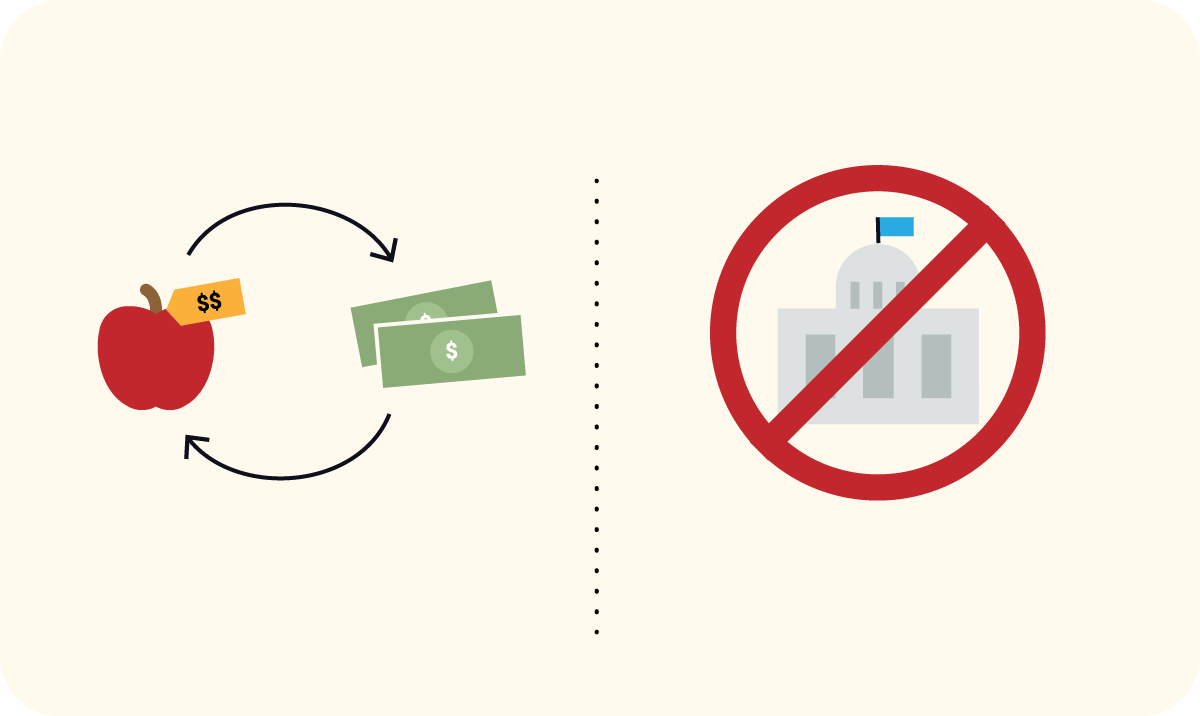
In a free market economy, participants are…
…free to engage in voluntary exchange of goods and services.
…free (to a large extent) from government interference.
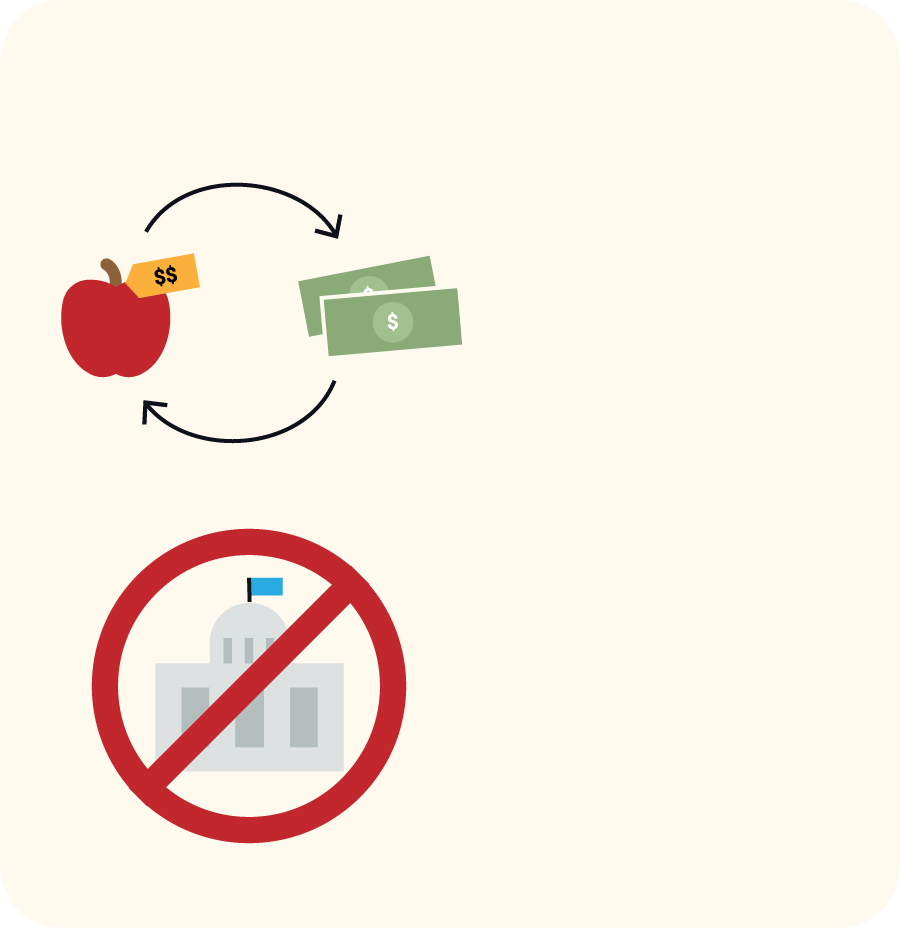
In a free market economy, participants are…
…free to engage in voluntary exchange of goods and services.
…free (to a large extent) from government interference.
Let’s consider an example. Say that a person – we’ll call her Ellen – decides to sell the apples that grow on her property. In a free market economy, she can choose how many apples to sell and set a price. But, Ellen can’t charge any price she wants if she hopes to make sales. The price must reflect what consumers are willing and able to pay.
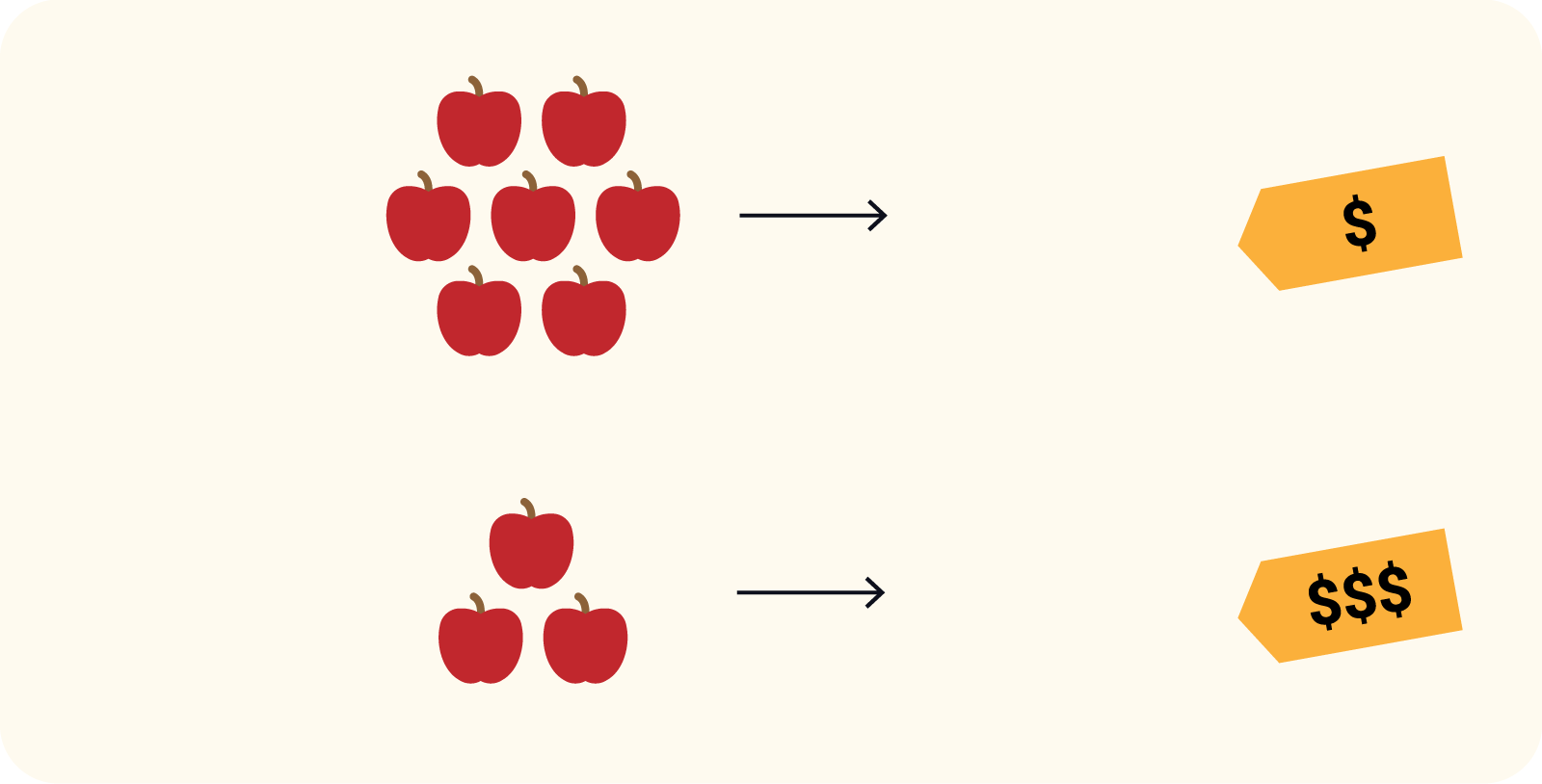
…she may need to lower her price to compete with other producers.
If Ellen is one of many apple farmers and apples are plentiful…
But if apples are scarce and many consumers are looking to buy…
…she may be able to charge a higher price.
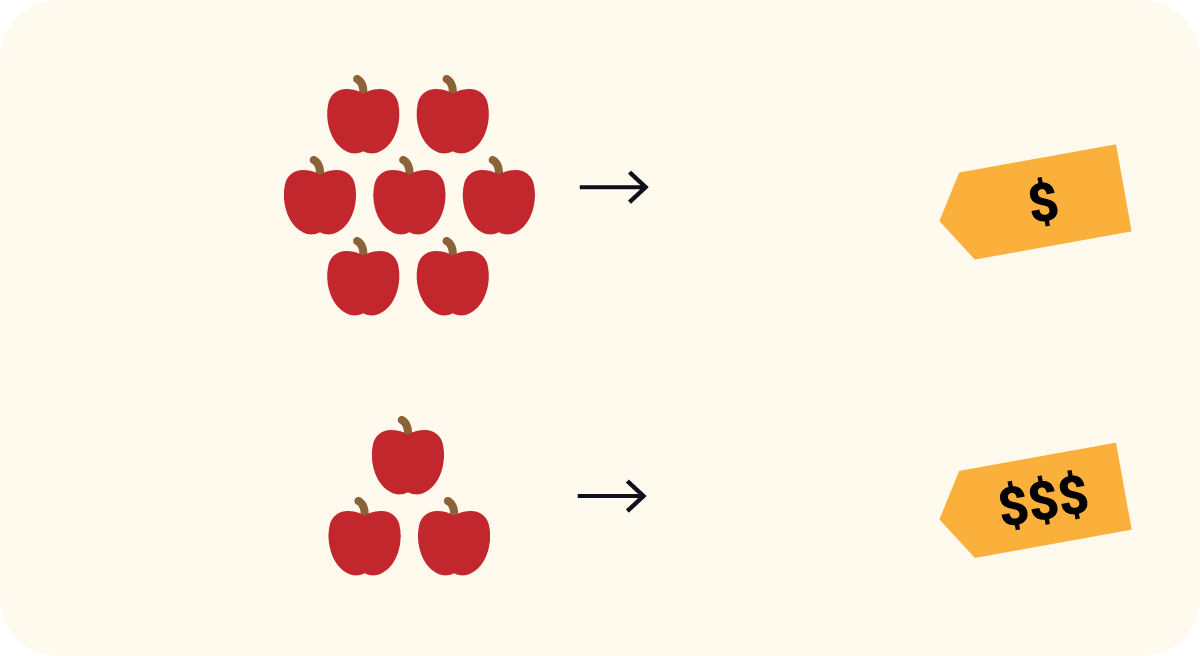
If Ellen is one of many apple farmers and apples are plentiful…
…she may need to lower her price to compete with other producers.
But if apples are scarce and many consumers are looking to buy…
…she may be able to charge a higher price.
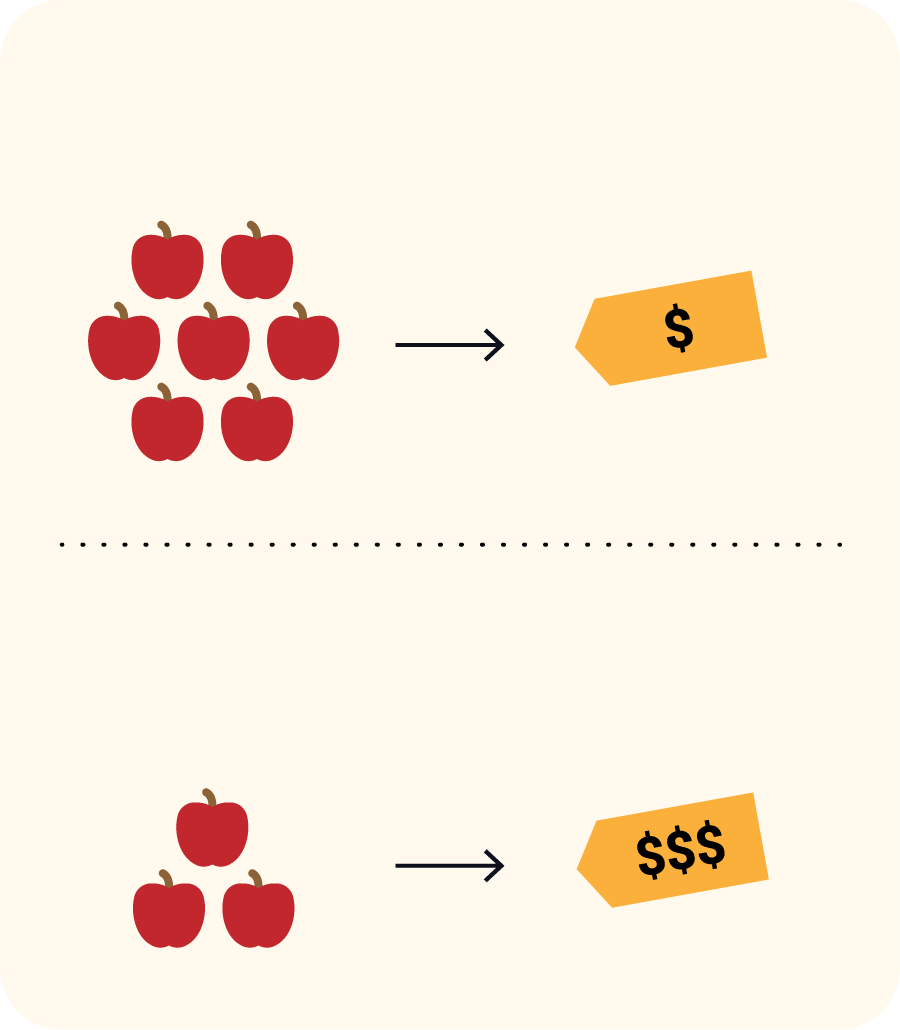
…she may need to lower her price to compete with other producers.
If Ellen is one of many apple farmers and apples are plentiful…
…she may be able to charge a higher price.
But if apples are scarce and many consumers are looking to buy…
This interaction between supply and demand helps determine the price of goods and services in a free market economy. When supply is high and demand is low, prices tend to fall. When supply is low and demand is high, prices tend to rise. Prices act as a kind of signal that guide producers and consumers in their decisions.
Let’s think about Ellen again. If the price of apples falls low enough due to high supply, Ellen might decide to put less of her time and energy into growing and harvesting apples. The low price of apples acts as a signal to Ellen – one that might lead her to choose to grow a different crop, one with a lower supply and higher demand (cherries, we’ll say). As Ellen and other apple farmers grow fewer apples, the supply of the fruit falls, and prices stabilize.
Proponents of a free market economy argue that voluntary exchange is often win-win. A producer generally can’t make a profit without offering something consumers are willing to pay for. The free market creates a system of crowdsourcing, inviting anyone and everyone to try to meet consumers’ needs and wants. Competition for consumers can push producers to improve quality, lower costs, and innovate. This, proponents say, is a key reason why societies with relatively free markets tend to be more prosperous than those with economies more tightly controlled by a government.
But others point out that free markets can struggle to produce such ideal outcomes on their own. Sometimes competition is limited – for example, when only a few large firms dominate an industry, like pharmaceuticals. In those cases, drug makers may have more power to set prices high, and consumers have to find a way to pay or go without their medicine. Critics argue that situations like these complicate the idea of truly voluntary exchange. After all, if a person needs insulin to survive, choosing whether to pay is not quite the same as choosing between apples or cherries, or between two different brands of sneakers.
In other situations, the costs of producing a good or service are not fully reflected in its market price. If a factory pollutes a river while producing cheap goods, the environmental damage may be borne by the wider community – not by the factory’s owner, investors, or consumers. There are also goods and services that markets may underprovide because they are difficult to sell profitably – things like community parks or child care. In cases like these, governments often step in to fund or regulate production. Economists describe these kinds of problems as market failures.
The free market economy stands in contrast to a planned economy, in which the government oversees decisions about what goods to produce, how much to produce, and prices. But no country has a purely free market economy or a purely planned economy. Modern economies exist on a spectrum, with some leaning more toward market coordination and others toward government direction. (The United States’ economy has shifted back and forth along this spectrum at different points in its history.)
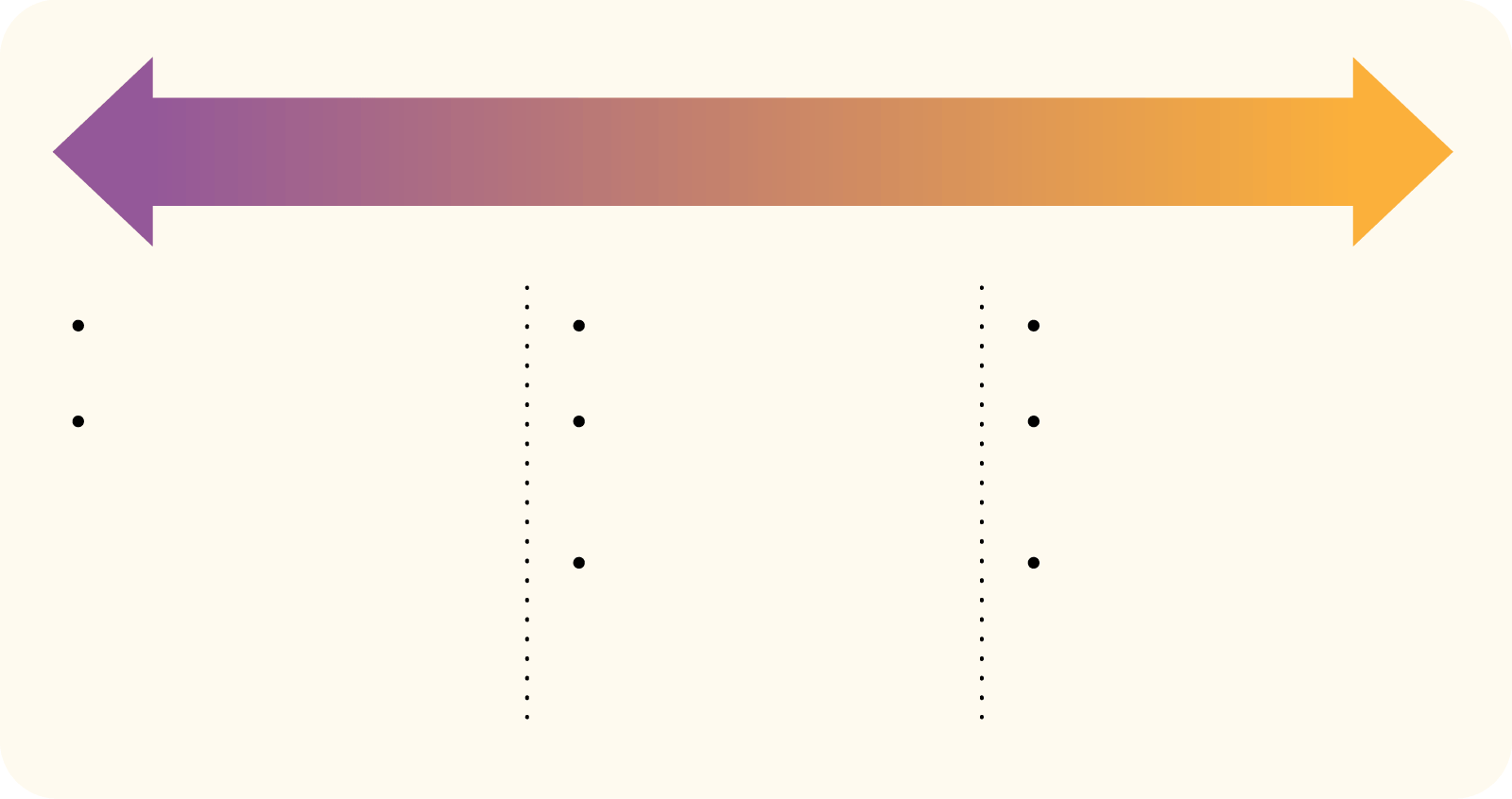
Planned Economy
Mixed Economy
Free Market Economy
Associated with communism and state socialism
In fully planned economies, governments make key decisions about what to produce, how much to produce, and prices
Associated with social democracy
Combines market activity and government intervention
Includes private ownership alongside regulation and public services
Associated with capitalism and laissez faire economics
Economic decisions are motivated by supply, demand, and profit
Governments play a limited direct role in markets, but enforce laws that support the free market
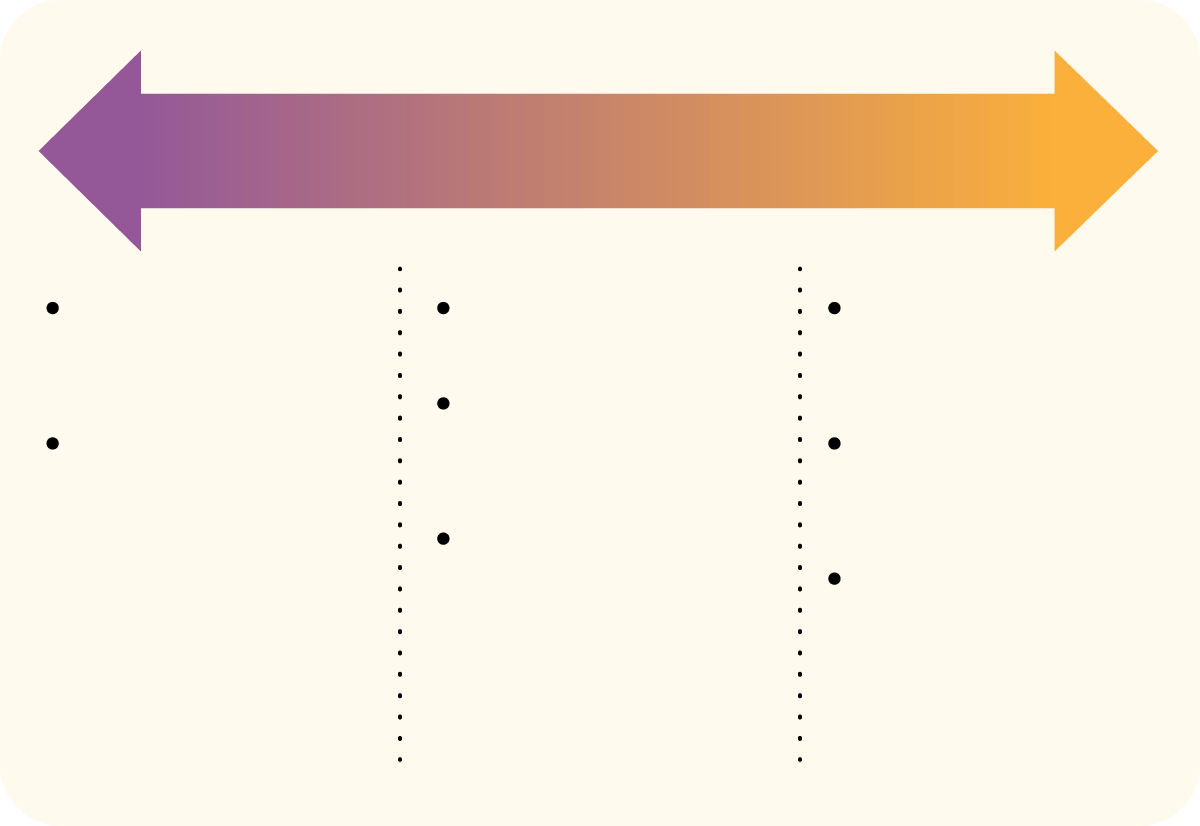
Planned Economy
Mixed Economy
Free Market Economy
Associated with capitalism and laissez faire economics
Economic decisions are motivated by supply, demand, and profit
Governments play a limited direct role in markets, but enforce laws that support the free market
Associated with social democracy
Combines market activity and government intervention
Includes private ownership alongside regulation and public services
Associated with communism and state socialism
In fully planned economies, governments make key decisions about what to produce, how much to produce, and prices
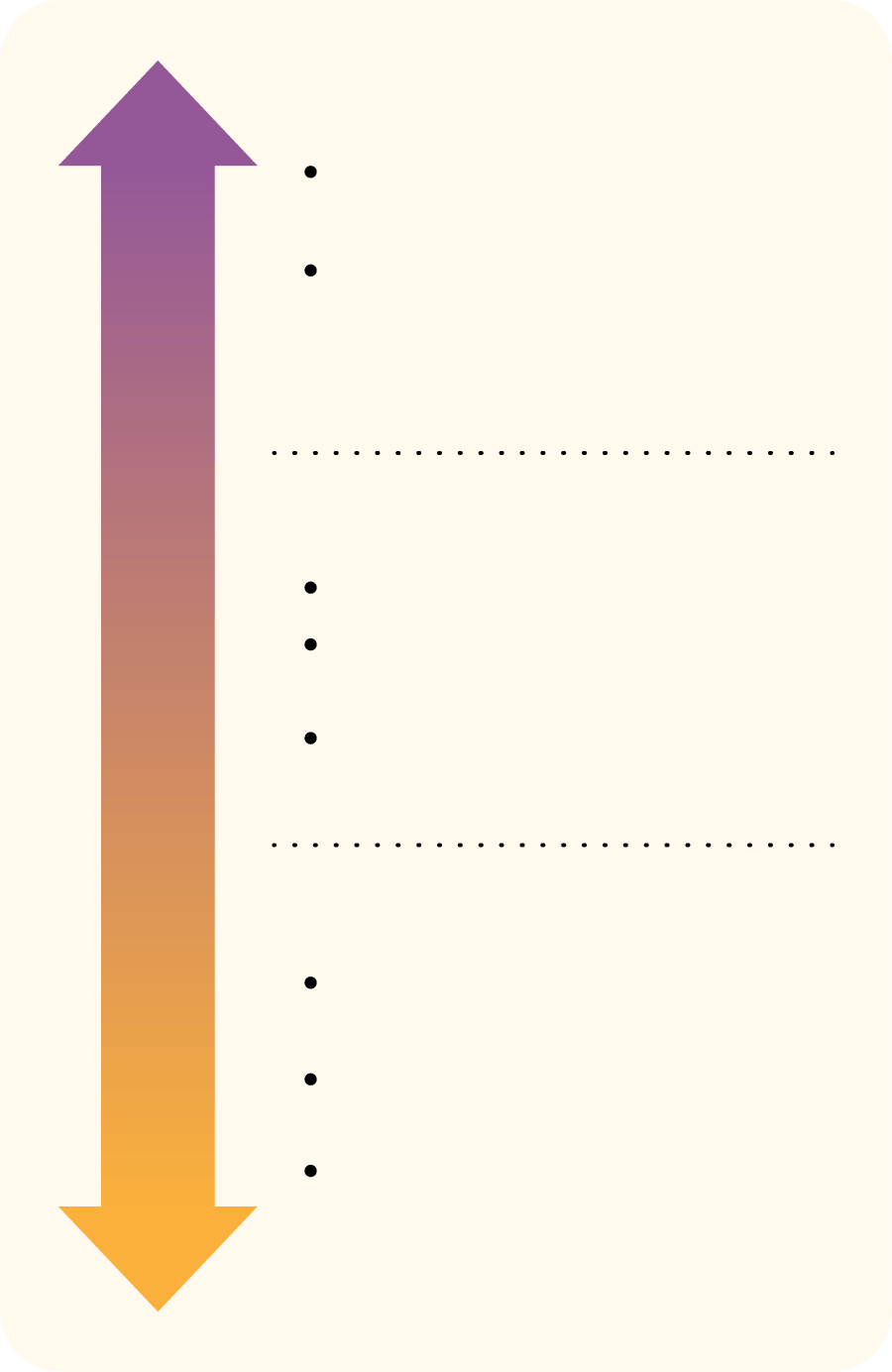
Planned Economy
Associated with communism and state socialism
In fully planned economies, governments make key decisions about what to produce, how much to produce, and prices
Mixed Economy
Associated with social democracy
Combines market activity and government intervention
Includes private ownership alongside regulation and public services
Free Market Economy
Associated with capitalism and laissez faire economics
Economic decisions are motivated by supply, demand, and profit
Governments play a limited direct role in markets, but enforce laws that support the free market
Debates about free markets are rarely about whether markets should exist at all. Instead, they are usually about how much freedom corporations and capitalists should have and when government intervention is justified.
Episode Connections
- Episode 1: Market Failure: Today, some Americans are debating whether the free market is the best way to organize the economy – and whether it can deliver broad prosperity and well-being.
- Episode 6: Thirty Glorious Years: After the Great Depression causes widespread unemployment and poverty, FDR institutes policies and programs to create jobs, provide economic aid, and regulate industry, shifting the country toward a mixed economy.
- Episode 7: Gilded Age 2.0: Beginning in the 1980s, Reagan and other neoliberal leaders strip government regulations and programs, pushing the country back towards a free market economy.
- Episode 8: The People’s Pushback: Today, many young people advocate for economic systems with increased government intervention to protect workers and the environment.